
Revival
A New American Revolution: #DALLASSTRONG, #ORLANDOSTRONG, #BATONROUGESTRONG?
When we admit we are weak, then we will discover the Strength of the nations.
I will punish the world for its evil, the wicked for their sins. I will put an end to the arrogance of the haughty and will humble the pride of the ruthless. Isaiah 13:11 (NIV)It’s an indictment on our nation when we puff up our chest in the face of our enemies and make trite, inaccurate statements about our supposed strength. American pride is finally coming back to haunt us. Our haughty, arrogant spirit has opened the gates of our nation to our enemies.
#orlandstrong #dallasstrong #batonrougestrongNo, America, we are not strong, and we need to finally admit it. Without a radical devotion to Jesus, we have no hope.
A NEW AMERICAN REVOLUTION
We need our President to humble himself, to admit our extreme vulnerability without God and to lead the nation in cries of repentance. Pastors, do the same. Nothing less than a new American Revolution will stop our downward spiral as a nation. Except, this time we aren’t fighting for our independence. We must humbly repent of our pride, arrogance and self-sufficiency. Instead of overthrowing the authority of the British monarchy, we must submit to the authority of the Kingdom of God. If we understand the nature of God, realization of our weakness is very good news for us—if we repent, cry out to God as a nation and surrender to the King.And what more shall I say? For time would fail me to tell of Gideon, Barak, Samson, Jephthah, of David and Samuel and the prophets— who through faith conquered kingdoms, enforced justice, obtained promises, stopped the mouths of lions, quenched the power of fire, escaped the edge of the sword, were made strong out of weakness, became mighty in war, put foreign armies to flight. Hebrews 11:32-34 (ESV)American can become strong out of weakness and put ISIS, cop killers, terrorists and foreign armies to flight—if we turn to God.
But he said to me, “My grace is sufficient for you, for my power is made perfect in weakness.” Therefore I will boast all the more gladly of my weaknesses, so that the power of Christ may rest upon me. 2 Corinthians 12:9 (ESV)
PROTESTS VS. REPENTANCE & FORGIVENESS
What if, instead of protests and attempting to force an agenda, we simply forgave? What if we hit our knees and admitted how dark our own hearts can be?The heart is deceitful above all things, and desperately sick; who can understand it? “I the LORD search the heart and test the mind, to give every man according to his ways, according to the fruit of his deeds.” Jeremiah 17:9-10 (ESV)God knows the depths of our heart and we are being tested as a nation. Will we humble ourselves or rise up in anger and pride? The answer to that question will determine the direction of our nation.
“God opposes the proud, but gives grace to the humble.” James 4:6 (ESV)We have to embrace meekness as a people—if we want our nation to be safe and favored again.
PRAYER FOR OUR NATION IS NOT ENOUGH.
It’s laughable when celebrities and politicians tweet and post about prayers being given during times of crisis. Are they really praying? To whom? Is the spirit of prayer really driving them, or is it something else? Maybe if we didn’t wait for tragedy to hit before a national movement of prayer launches, we would find the protection and prosperity we so desire.When I shut up the heavens so that there is no rain, or command the locust to devour the land, or send pestilence among my people, if my people who are called by my name humble themselves, and pray and seek my face and turn from their wicked ways, then I will hear from heaven and will forgive their sin and heal their land. Now my eyes will be open and my ears attentive to the prayer that is made in this place. 2 Chronicles 7:13-15 (ESV)Prayer isn’t enough. Per the above passage in 1 Chronicles 7, the prescription for national safety is more involved than simply tweeting a prayer. It will truly take a new American Revolution to see a response like this on a large scale level:
- HUMILITY—We are nothing without God. This is why it’s so critical to elect politicians who are meek. Proud, arrogant people give hope in the natural, but spiritually they are a serious liability.
- PRAY—Prayer movements must erupt from coast to coast. Never ending, heart rending intercession must launch now.
- SEEK—God is calling us into his presence! A holy people running after and encountering God as a lifestyle is a must.
- TURN—The vile wickedness in our nation, and in so much of our church, is a stench in the nostrils of God. Repentance has to begin, and when it does, God will finally forgive our sin and hear our prayer!
Seven ways the local church can be a catalyst for revival

Are you among the remnant people who will embrace the firestorm from Heaven that will bring revolution to the church?
We need a reformation in the church of the Western culture—and fast. I’m not talking about a tweak or adjustment, but rather a costly, troubling, invasive, offensive and radical change to what we know as the church. A firestorm from Heaven is coming, and only those who are ignited in that fire will embrace the coming shift. Religious traditionalists and those who are resistant to the deeper call will sadly reject this transition. This is why we must prepare the people under our care now! The Holy Spirit wants his church to be ready!
This great end-time verse has universal application:
Let us rejoice and exult and give him the glory, for the marriage of the Lamb has come, and his Bride has made herself ready; Revelation 19:7 (ESV)
Sunday go to meeting church was great for previous generations, but it’s gotten us as far as can go. A revolution must come. That revolution will come from within the local church, however, not in spite of it.
I can’t imagine not attending a local church with a faithful, passionate pastor leading the way. I am an unapologetic, determined supporter of the church in its current form, and I am excited about seeing reform emerge from my view in the pew on the inside. Sadly, too many are disconnecting from their local church, presuming an advance into culture without its restraints is somehow more spiritual. They are hurting, not helping, the cause of revival.
I was talking with my pastor and good friend today about this issue. He affirmed the importance of being a champion of the local church, and I fully agree. More than ever I want to go above and beyond in my communication to ensure everybody understands my heart regarding the local church. Talk of reformation can easily give fuel to the anti-church crowd, and we must avoid that at all costs. Without the local church, we will have little hope of seeing the revival that we so desire last more than a year or two—if it even sparks at all.
Often, my quick, 140 character, social media quips may give the impression that I’m anti-church. Please forgive me if I have done this! That grieves me deeply! That couldn’t be more opposite of my actual belief system and heart! I am contending for powerful local church explosion and the strength and honor of pastors here in Branson, Missouri and in every city around the world! The anti-local church/anti-pastor crowd is doing great damage to the Kingdom and I can’t afford to be counted among them.
So, to clearly communicate my position so there is no misunderstanding whatsoever:
I fully embrace and support the local church, and I endeavor to honor pastors and leaders unreservedly. From that place, with a healthy and pure heart, I also embrace reform.
As we prepare for the coming revolution, we all must be connected in a local church that’s led by anointed, Spirit-driven leaders. That’s non-negotiable. The coming reformation requires we are zealously submitted and devoted as the shift draws near.
That being said, I need to write a raw, unrehearsed message about the growing threat that the current local church wine skin can be to revival. Instead of being a strategic support to city-wide revival, it’s at risk of hindering the cause. As we proceed toward a reformed model and a new wine skin that can hold the new move of the Holy Spirit, the resulting shock will be a catalyst for an immeasurable move of God that has yet to be imagined.
What I’m going to share will certainly require a full blown reformation in the church if we are going to see revival come. Church as we know it must come to an end. God isn’t planning on enhancing the church systems that are already in place—he’s planning on eradicating many of them for the sake of something so otherworldly that few will even recognize it as the church—and many will resist with religious fervor.
The cost will be great and most will reject it, yet God is raising up a hidden remnant that will be a clear and present danger to the religious systems that refuse to bend.
From my book The Coming Church:
We soon won’t be able to define going to church the way we do now. God is coming to reform, to crush structures of old for what is to be introduced very soon. Our call isn’t to stand strong until the shift comes, it’s to prophetically sound the alarm and awaken those at risk! God is coming!
 From my book 20 Elements of Revival:
There are over 19,000 cities in America, and not one of them is experiencing revival. Some have pockets of Holy Spirit activity, and certainly there are true moves of God dotted all across the land—but there are no cities that are fully engulfed in revival. No cities have been taken—yet.
In order for us to experience revival in the church, we have to understand that it’s going to occur at the city level, not the local level. Why? The church is Scripture is identified by the city, not by the street corner. For example, we have the church at Ephesus, the church at Corinth, etc.
Instead of hundreds of churches in a city, John identified a total of seven church in all of Asia at the time. They were designated by cities. Certainly there were many local expressions within the city, but they weren’t entities unto themselves. They were a part of a greater whole.
John to the seven churches that are in Asia: Grace to you and peace from him who is and who was and who is to come… Revelation 1:4 (ESV)
This is why reports of revival that are limited to a single local church must be viewed as a single piece of a much greater movement. Unfortunately, local church moves of God, as wonderful as they are, rarely impact the city, much less the world, and ultimately they die out.
The local church cannot be an end in itself. The local expression isn’t to be the primary experience for Christians. It’s one gear inside of a massive machine. It’s one leg of a table. It’s one organ in the body.
For most Christians, the Sunday service is the epitome of their church experience. It’s the greatest experience of the week. This must change! The church culture they are participating in must evolve from local only to local/regional. The coming fire of God will most likely ignite outside of their local, Sunday experience, and they will need to be right in the middle of it when it happens. This means they must be connected regionally and not only locally.
If fact, when I was giving leadership to Revival Church, I communicated regularly in our services that the spark of revival would most likely not occur in our church. Statistically, it wasn’t probable. Others in the city were contending for fire to fall in their churches too. Why would we presume our church, instead of any of the other hundreds in the city, to be the landing point God would choose for the region? A regional outpouring would gather people together from many churches. That means they’d move out of their local church and into another location with their pastor and others in their congregation to join with the rest of the city church.
When the fire fell in Brownsville, the other churches of the city should have cancelled most of their services so they could have joined others around the fire. The same is true for Lakeland, Florida and Toronto and other places where God moved in a single location.
While we were contending for revival to erupt, we were doing so with the city in mind, not our local expression. The goal wasn’t a move of God in our church. That would be too limiting and even self-serving. I was going after an entire city. The God of the city was on the move, not the God of Revival Church alone.
I explained that, when that spark of revival lit in another church or ministry somewhere in the city, we’d have no option but to excitedly lock arms with that church and serve the work of fanning the flames. At that time, the instruction would be to cancel as many of our services as necessary to join with the movement in the city. If we and other churches didn’t do that, the flame would die out.
To give you a better understanding of why the local church is in such a critical place of either being a hindrance or catalyst to revival, I need to spend a little time explaining what the reformation may look like.
THE COMING CHURCH
What is coming to the Church is not an enhancement or an adjustment. The destruction (or we could use the word deconstruction) will be so comprehensive and total that it will not only remove current structures, but also the faulty foundations (anything other than the foundation of Christ) they were built on. The coming Church will look nothing like the Church we now know.
Disgruntled people are leaving churches by the thousands, frustrated with their experience. These people must not leave the church. They must surrender their desires and lay down their lives for the church! If today’s disappointed Christian can’t withstand this current low level, marginally supernatural structure, what will they do when the fireball from Heaven crushes them fully? What will their response be when they are called into the humbling ministry of nameless, faceless night and day prayer? How will they react to an atmosphere of groans and cries of deep repentance and Holy Spirit intercession that cuts to the heart? What will happen when they are called to lay down their lives for the very system they despise?
In my book The Coming Church, I detail several key changes that are coming to the local church in the reformation. Here’s one:
Local churches will be regionally focused. The level of impact that the rock from Heaven will bring will not be confined to local churches. Pastors and leaders will stop focusing mainly on developing their own local ministry and will instead shelve much of what they did in the old church model and focus on serving the regional mission. The local will give way to the regional as leaders lead the people into encounter, into regional mission and into the greater vision of revival and reformation. The spirit of Pharaoh that focuses on personal goals and keeping people locally focused will give way to the spirit of reformation and Kingdom advance that was manifested through Moses and Joshua. (Read more about this in my book Pharaoh in the Church.)
In the coming Church, we will be entirely focused on God showing up and visitors being troubled, not the other way around. The only way we can impact the people of the world is if we jealously guard the ark, God’s presence. The coming Church will result in a ferocious invasion of God’s presence into the Church, and this will result in a mass exodus of the naturally minded and lukewarm.
The remaining remnant will automatically have a regional, city focus. They will zealously submit to local church leadership while simultaneously advancing with others under apostolic and prophetic leadership on a city level. There won’t be any conflict or competition. The local will serve the regional and the goal of revival will be common among all.
On the other side of the reformation I believe we will see clear, anointed, governmental and biblical leadership on a city level. Pastors will be submitted to apostles in the city, not only those in their denominational headquarters. The church will run with great precision as everybody is on the same page, often in the same place and functioning according to their specific role in a clearly communicated grand design.
AN EXAMPLE OF HOW THE CITY CHURCH MIGHT FUNCTION
SUNDAY MORNINGS
As an example, people will be in their local churches on Sunday mornings, as their local pastor leads in fervent prayer and worship and trains for battle after receiving key instructions from city apostles. These wouldn’t be seeker focused events, but rather furnaces of Holy Spirit activity that would result in a tremble in the people!
SUNDAY EVENINGS
Sunday evenings the local church pastors and those in their congregations would join with the other Christians in the region in a large venue such as a convention center or possibly the largest church building in the city where the apostles of the city cast vision, instruct and keep everybody on the same page.
MONDAYS
Mondays would be devoted to several hours of prayer in the larger venue as the apostles, prophets, pastors, teachers and evangelists publicly lead people into intercession for the region.
TUESDAYS
Tuesdays could be devoted to teaching specific to what God was revealing the previous two nights. Teachers in different parts of the city would gather people together for a few hours of small group instruction.
WEDNESDAYS
Fellowship and personal ministry would fit great mid-week. People could gather together in small groups and simply have fun, pray for one another and encourage each other in the battle. This would most easily function under the leadership of the individual local churches.
THURSDAYS
Outreach and various ministries could be the focus of Thursdays. Some teams would hit the streets to witness while others would minister deliverance while still others could hold events for children and youth.
FRIDAYS
Prophetic training and impartation would be an important part of the week. God will reveal key regional strategies to prophets and apostles, and as they communicate that and train people in the prophetic, the city church will grow stronger, more powerful, precise and activated.
FRIDAY NIGHTS
All night prayer, from 10pm until 6am, would be attended by all, either in the large venue or spread out in homes and local churches throughout the city.
SATURDAYS
Rest!
Of course, days and actual focuses are interchangeable, but you get the idea.
With this model, pastors of local churches don’t have to fulfill every need for the people under their leadership as they release and lead them into other venues for growth and training. They literally only have to lead one or two events per week. The rest of the time they are getting filled, serving in other capacities and supporting the greater regional vision.
Similarly, teachers will have a constant outlet to teach, and they will do so under the leadership of the apostolic leaders of the city. They will train people according to what is timely in the city. The same is true for the regions prophets and evangelists.
This also means most Christians will be involved in regional ministry, in several different venues, under different unified leaders, six days a week. The church will be strong, alert and at the ready.
Additionally, apostles and leaders in the region will have the flexibility to call special meetings, solemn assemblies and other events with the confidence in knowing every Christian in the region will respond.
15 Blow the trumpet in Zion; consecrate a fast; call a solemn assembly; 16 gather the people. Consecrate the congregation; assemble the elders; gather the children, even nursing infants. Let the bridegroom leave his room, and the bride her chamber. 17 Between the vestibule and the altar let the priests, the ministers of the LORD, weep and say, “Spare your people, O LORD, and make not your heritage a reproach, a byword among the nations. Why should they say among the peoples, ‘Where is their God?’” Joel 2:15-17 (ESV)
Wow! Everybody had to respond to the regional call to pray. Even those who were nursing infants or getting married had to cancel their plans and gather together for the sake of their nation. No excuses allowed!
We need instant, regional response again today.
SEVEN WAYS THE LOCAL CHURCH CAN BE A CATALYST FOR REVIVAL
ONE: MINIMIZE BUSYNESS
There are a lot of tired pastors and people in churches today because of overstuffed, inflexible schedules. It’s common to fill church schedules with all sorts of programs and ministries, special events and other activities. It’s true that a lot of wonderful ministry occurs at the local church level, and it’s easy to expend a lot of time and energy on those activities.
The problem comes when a call for the church of the city (which is how the church is defined biblically) needs the participation of Christians in the region to support a greater cause.
I propose, with few exceptions, local church schedules should be flexible enough to cancel in a moment’s notice so the people can be released to attend to regional church focuses.
15 Look carefully then how you walk, not as unwise but as wise, 16 making the best use of the time, because the days are evil. 17 Therefore do not be foolish, but understand what the will of the Lord is. Ephesians 5:15-17 (ESV)
TWO: UNDERSTANDING REGIONAL PRIORITY
I was part of a large, city-wide event that was to be held at the Palace of Auburn HIlls in the Detroit area. Unfortunately, the event had to be cancelled because pastors wouldn’t release the people under their care from their Wednesday night church responsibilities to attend.
Not only should the pastor have released his people, he should have led the charge!
How unfortunate that a lesser, local church weekly service kept people away from the more important regional event.
When regional prayer events, revival meetings or other key, strategic meetings are called, it’s critical that the local focus yields.
We must see a time come when every pastor and every Christian in the city shows up at the city events. Solemn assemblies are nearly non-existent today due to misplaced ministry priorities.
Consecrate a fast; call a solemn assembly. Gather the elders and all the inhabitants of the land to the house of the LORD your God, and cry out to the LORD. Joel 1:14 (ESV)
THREE: REJECTING A FOCUS ON SURVIVAL AND LOCAL CHURCH GROWTH
Instead of focusing on the success of the regional church and the advance toward revival at that level, local churches are often focused mostly on growing or surviving themselves.
If we were honest, we’d admit primary reasons we as pastors and leaders might not want people under our care involved in other ministries and churches is because they might leave and take their money with them. I believe this insecurity is a serious violation of the trust God has given us as leaders. We must have open hands and encourage people to move in and out of our local churches easily so they can fulfill their vision, and the city vision, instead of our own.
FOUR: RELEASING RESOURCES
Regional events and ministries often need the people who are part of the various local churches in the city to serve. People, finances, time and energy are often guarded by local churches which leaves regional assignments under-resourced. They often fail.
Several years ago, I knew it was critical to cancel my own church plans for a month so people could be free to serve at a regional revival event about 40 minutes away. It would have been inappropriate for me to keep them focused on our own local church ministries when the fire was lit elsewhere. The regional event needed intercessors to support that move of God, so I eagerly released those precious resources, amazing prayer warriors, along with any finances they wanted to give there, to undergird that regional event.
And having sent into Macedonia two of his helpers, Timothy and Erastus, he himself stayed in Asia for a while. Acts 19:22 (ESV)
FIVE: REFUSE TO GIVE IN TO JEALOUSLY, OVERPROTECTIVENESS AND RESISTANCE
As I stated above, the revival in your region most probably will ignite in a church other than your own. We must avoid the temptation to be jealous if that happens. We also can’t be so nervous about other people, visiting evangelists or other leaders that we resist or avoid what is happening through their ministry.
I’ve been involved in true moves of God that died out simply because leaders were taking a wait and see approach to it. They were nervous about what was happening there—for no reason. They held back and pressured people in their church to stay put. I’ve shared about my experience in Detroit before. God was moving. Pastors were resisting. I’m still grieved about that. Jealousy will kill a move of God, and it will bring judgment speedily.
8 And Saul was very angry, and this saying displeased him. He said, “They have ascribed to David ten thousands, and to me they have ascribed thousands, and what more can he have but the kingdom?” 9 And Saul eyed David from that day on. 1 Samuel 18:8-9 (ESV)
The next day a harmful spirit from God rushed upon Saul.. 1 Samuel 18:10 (ESV)
SIX: SUPPORT GREATER GROWTH
If people are limited to connecting at a local church level, their growth can’t help but to be stunted. Today, few are ready for revival because local churches are, by design, only focusing on a limited set of tools they are equipping their people with.
I can’t imagine, as a leader, only sitting under one pastor and being limited in my growth to their awesome yet limited strengths. While we are called to radically support and serve a local pastor and body, we can’t stop there. I believe it’s important to connect in various churches and ministries in a region on a regular basis. Not only can we grow much faster, we can connect local churches together and experience greater strength on that regional level as well.
SEVEN: UNDERSTAND LEVELS OF AUTHORITY
Senior pastors of a local church are not the senior authority in the region. It will take quite a reformation for us to step into city-church government, but we can start now by acknowledging that leaders on a regional level must have the support and participation of the more localized leaders.
Apostles are the gatekeepers of a city, and it’s critical to know who they are if we are to advance toward revival.
Peter Wagner says:
…recognizing and affirming apostles of the city might well be the most vital missing link for seeing our cities truly transformed.
Several years ago I worked as a supervisor at a T-Mobile call center in Colorado Springs. There were over 1500 employees, and it required at least 50 supervisors to manage that many people. I was the local leader, if you will, of my group of 25 employees. It was quite obvious that I was not the senior leader of T-Mobile. I had certain liberties to lead according to my style and local vision for developing my team, however, there were both limits to that freedom and serious expectations. I reported to one of a handful of managers, who in turn reported to the Associate Directors. That small team reported to the Director of the call center. That wasn’t the end of the org chart, but you get the idea.
My job was important, and I had limited authority, and a lot of responsibility. However, I could only function in that authority as I submitted to the greater authorities. The Director of the call center was, in effect, the gatekeeper of the call center. It was an important position.
The authority structure wasn’t there to stroke egos or to build individual departments of the call center. It was there to most successfully impact the world with cell phones!
The same is true for the church, but the mission is much more serious and important.
Today, pastors are often only submitted to denominational leaders that aren’t even based in their city. They leapfrog city authorities, and, in turn, ignore the call for them to lead the people into regional assignments.
I agree that such a reformation that I touched on in this article will be extreme. It won’t happen overnight, or even in a handful of years.
What can happen immediately, however, is that we embrace the shift and come into agreement to serve the city church and to advance toward revival at that level.
A local church move of God will be wonderful, but it won’t last. We must see a foundation built regionally that will support a massive move of God.
Maybe your region will be the first of 19,000 that will see the church of that city set ablaze in revival!
theFurnace: Branson, Missouri Revival Strategy—YOU are needed!
theFurnace: Pastors, leaders, intercessors and the remnant church that is hungry for revival must come together.
NOTE: Our next revival event is MONDAY, JUNE 27 AT 7PM!
NOTE: Our next prayer event is FRIDAY, JULY 8 AT 10PM!
Meetings and services alone won’t cut it. We must to gather a company of firebrands from the region to contend together. This is the first phase of the strategy for revival in Branson.
What would happen if every pastor of every life-giving church in the region gathered together each week in fervent, Spirit-driven intercession and prophetic impartation? The atmosphere in the region would receive a continual shock of holy fire!
I’m looking for a revival company in Branson. These are pastors, intercessors and others who are ready to move past meetings and programs and burn hot with others in the region.
We will meet in churches for intercession, as we have been already in Branson. We will also meet on certain Monday evenings for prayer, training and prophetic messages.
REVIVAL PROTOCOL
Frank Bartleman, who was instrumental in the Azusa Street outpouring over 100 years ago, sent Evan Roberts a telegram. Evan was giving leadership to the great Welsh Revival and Frank Bartleman wanted to know what he could do to see a similar move of God in Los Angeles.
What Evan instructed goes down in revival history:
Congregate the people together who are willing to make a total surrender. Pray and wait. Believe God’s promises. Hold daily meetings.
This is what we are working toward in Branson.
While local churches are an important part of the overall plan, local churches alone have no hope of initiating or sustaining regional revival without significant, strategic unity with the greater spiritual blueprint. It’s time to bring focus to the city church and to lock arms together with Believers in our region at a much higher and consistent level.
THEFURNACE MISSION STATEMENT & STRATEGY
theFurnace exists to gather forerunners who are united in the mandate to initiate reformation in the church and revival in the region. As carriers of the fire of God, we are single-minded in our mission to rally a generation that will embrace the cross of Christ, pursue radical holiness, engage in fervent prayer, live a life of repentance and experience both the freedom and the fear of the Lord.
CONSECRATION: As a company of reformers we are alert and intentional in our mission. The call for all is to gather together continually, free of distraction, with surrendered hearts, in unwavering agreement and with an unusual investment of time, energy and passion.
FIERY PRAYER: The biblical church is a house of continual prayer, and we commit to upholding that standard. Every Christian has the sober responsibility and wondrous opportunity to pray in such a way that the fire of God burns night and day in our lives, our church, our region and the nations.
FEAR & TREMBLING: The fear of the Lord will always be before us. Brokenness and repentance is a continual reality in the resulting atmosphere that will facilitate a historic end-time revival.
CULTURE SHOCK: When truth is preached, religious spirits react and the hungry marvel. Comfort zones are threatened and personal endeavors are disrupted. In the fear of the Lord, we will prophetically decree shocking and liberating realities of the Kingdom of God.
WONDERS: A supernatural baptism of fire will hit all who have given themselves to Jesus without measure. Death to self, humility and a bold, burning spirit of prayer will open the door to a life of wonders.
YOU ARE NEEDED

See our schedule of revival events at www.thefurnace.tv/branson and our prayer nights at www.prayerteam.tv.
I am looking for a small company of people who will pray and advance together every time we have an event scheduled.
You are invited to be on that team.
Pastors, leaders, intercessors, prophetic people and everybody hungry for a move of God—will you contact me today? Share your story and let me know if you have any questions. Then, let’s commit to advance toward revival in Branson together!
Contact me at [email protected] TODAY!
Pastors don’t rule the city—but they can hinder God’s plans for it.
The pursuit of city wide revolution must no longer be resisted by the spiritual leaders.
I’m risking a lot by writing this article, but the grief in my heart is telling me it’s a risk that is well worth it.
I’m beyond disgusted, and I am going to reveal to you the source of that sickness that’s churning in my spirit in a moment. First, since I’m jumping way out on a limb in a way that will make it very easy for people to misunderstand my heart, I have to make some qualifying statements.
First, I am a radical, unapologetic lover and supporter of pastors and leaders. What many of them go through for the sake of the advance of the Kingdom is worthy of high honor. I am quick to defend a ‘wrong’ pastor against a ‘right’ congregant due to the fact that God has ordained them. God establishes all leadership. I absolutely love pastors!
Additionally, I embrace with great passion the local church, even in it’s yet to be renewed wineskin. We must commit to the ministry of the local body God has placed us in with great zeal.
For zeal for your house has consumed me, and the reproaches of those who reproach you have fallen on me. Psalm 69:9 (ESV)
Lastly, I understand how terribly an outsider can wreck havoc and bring destruction to a local body. We should guard our pulpit from wolves. I’ve been ravaged by wolves in ministry before and, trust me, the knee-jerk reaction is to reject anybody outside of my circle of trust.
However, it’s that last point that brings us to our current crisis. The gun-shy dog syndrome is causing pastors to be tentative at best and outright dismissive and cruel at worst toward God’s circuit riders that are on assignment in their city.
PASTORS DON’T RULE THE CITY
I continue to hear from people that God desires to use to impact a city, people who are outsiders but who carry key authority, messages and ordination to function with apostolic and prophetic strength in a region.
 They are rejected, one after another. They are gossiped about. They are murmured about. They certainly aren’t celebrated, as they should be.
There was a particular well known evangelist that came to a city, and God was working wonders. The pastors were few in number at the meetings. The gossip and suspicion and rejection of this ministry was being whispered through the town. That makes me sick. I just can’t hold back anymore. You have to be kidding if you think God is going to bring revival to your city if you treat God’s messengers like this. It’s shameful.
Pastors, you have to get over it. When revival comes to your city, your ministry will be threatened. People may flock to the greater city meetings—and you should too. If I was asked whether it’s best to stay in position in our local church or to rush to an outpouring in the region, with grief I’d counsel the person to stay submitted in their local church. However, I’d probably leave with tears in my eyes and fire in my veins. The pastor of that church should never put that person in such a terrible position. They have to choose between the sudden and timely fire of God in the city or fulfilling their duties in their local church? The pastors should be shouting to everyone of his sheep, “Follow me to the pillar of fire!”
But, unfortunately, that’s not how it works. Rejection is the norm. Evangelists know that in order to get the pastors on board they have to choose a neutral location such as a convention center. If they hold their meetings in a local church, other pastors won’t come. Again, this is disgusting. Shameful.
I’ve experienced this type of resistance myself. Many tears have been shed in the Burton family through the arrows of other ministers. And, by the way, the arrows that hurt aren’t only the ones that are clear, vicious attacks. It also hurts when other pastors in the city don’t encourage and visibly support the mission of revival. Rejection and resistance can be felt by God’s messengers. Silence is loud.
Such treatment is par for the course for prophetic and apostolic people especially. However, don’t worry. We signed up for this. It’s not about us.
It’s not about tending to the wounds of the prophets, but rather it’s about, once and for all, dealing with the rejection of God’s ministry through them.
1 Now at Iconium they entered together into the Jewish synagogue and spoke in such a way that a great number of both Jews and Greeks believed. 2 But the unbelieving Jews stirred up the Gentiles and poisoned their minds against the brothers. 3 So they remained for a long time, speaking boldly for the Lord, who bore witness to the word of his grace, granting signs and wonders to be done by their hands. 4 But the people of the city were divided; some sided with the Jews and some with the apostles. 5 When an attempt was made by both Gentiles and Jews, with their rulers, to mistreat them and to stone them, 6 they learned of it and fled to Lystra and Derbe, cities of Lycaonia, and to the surrounding country, 7 and there they continued to preach the gospel. Acts 14:1-7 (ESV)
Paul and Barnabas didn’t visit Iconium for a vacation. They were there to lay down their lives for the sake of God’s call on their lives. Instead of being celebrated, instead of leaders rallying around them, they were mistreated. In fact, the leaders tried to kill them—for delivering good news.
So, what did they do? They fled. They went to Lystra. A new chapter and a fresh start was upon them. What happened there? Paul was stoned.
19 But Jews came from Antioch and Iconium, and having persuaded the crowds, they stoned Paul and dragged him out of the city, supposing that he was dead. 20 But when the disciples gathered about him, he rose up and entered the city, and on the next day he went on with Barnabas to Derbe. Acts 14:19-20 (ESV)
He was left for dead, but survived. While I don’t want to make it sound like the trials of God’s messengers in America today are at the same level of those that Paul experienced, or of those in other nations that have outlawed Christianity are experiencing today, I do want to offer a parallel. Today the religious leaders, those who don’t want their status quo touched by an outsider with another focus or level of authority or charisma, are attacking them through gossip and other forms of rejection. Often their credibility, their motives, their ministries are assaulted and threatened.
The attacks of supposed spiritual leaders can be relentless.
In fact, the ministry of Paul and Barnabas so incited the region, Jews from Antioch and Iconium actually followed them in order to defame them in their next city!
It would seem that the spiritual leaders, the pastors of today, presumed to rule their respective cities. They banded together and resisted with violence the messengers of God. However, I love how the story continues, without any pretension whatsoever:
21 When they had preached the gospel to that city and had made many disciples, they returned to Lystra and to Iconium and to Antioch, 22 strengthening the souls of the disciples, encouraging them to continue in the faith, and saying that through many tribulations we must enter the kingdom of God. 23 And when they had appointed elders for them in every church, with prayer and fasting they committed them to the Lord in whom they had believed. Acts 14:21-23 (ESV)
They would not be denied! They returned to Lystra, Iconium and Antioch! The spiritual leaders of the cities would not dictate whether they would advance the Kingdom of God there or not!
The desire of Paul and Barnabas certainly was to work together with the leaders of the Jews and Gentiles, and to be welcomed in with open arms so they could tend to the difficult assignment God had given them without any unnecessary resistance.
This is the passion of evangelists, prophets and others that God is raising up today to initiate reform in cities. They desire the pastors of the city to rally around them! Don’t be suspicious. Open your pulpits! Let them cast their vision for revival!
It pains me to say this—if pastors won’t honor those God is bringing to labor with them, there comes a time to either shake the dust off your feet and move on, or to power through without their support.
14 And if anyone will not receive you or listen to your words, shake off the dust from your feet when you leave that house or town. 15 Truly, I say to you, it will be more bearable on the day of judgment for the land of Sodom and Gomorrah than for that town. Matthew 10:14-15 (ESV)
What would the Pensacola Revival have been without Steve Hill being received from the outside?
What would Toronto have been without Randy Clark?
Evan Roberts was rejected, and then the Welsh Revival broke out.
William Seymour’s message was rejected and the door to the building he was ministering in was padlocked—so he moved to 214 Bonnie Brae Street. After outgrowing that space, his next stop was Asuza Street.
Until pastors value the pursuit of a move of God in the region more than a move of God in their own local church, conflict, resistance and disunity will reign. Local churches are merely departments of the greater city church and MUST be in sync with what is going on at that level. If revival is being pursued, will doors be padlocked? What happens when the meetings are being held in a church other than yours? Will you still radically support it, lead the people there and honor those God is calling to give leadership to it? It continually grieves my heart when I hear about pastors who refuse to unite at a strategic level with other pastors. God will raise up a lay remnant if today’s senior leaders can’t lay down their own pursuits for the sake of the greater call in the region.
No, pastors don’t own the city. We must honor them and support them as they work tirelessly in the assignments God has given them. However, I’m done with the ridiculous rejection of people who are paying a great personal price to serve God among them. Visitors to town, people that have quit jobs and uprooted their families to contend for revival in a new place, those who have no friends in the city they are assigned to, those who feel alone and would love to be well received, should be celebrated and encouraged to move ahead with no resistance and with the zealous support of the town’s spiritual leaders.
And, yes, there’s an entirely different article that can be directed at the evangelists and prophets. If they can’t handle the heat, they should get out of the kitchen. But we’ll leave that article for another day.
For now, is it possible even to have revival at a city level? Will pastors finally embrace those who God has called to help facilitate an outpouring? Will they stop building their own little kingdoms for the sake of revival in their city? If not, it’s time to advance in humility and boldness, whether the pastors like it or not. If the pastors don’t yield, love and honor God’s messengers, there’s a remnant waiting to step into position, and their time may be soon upon us.
Wickedness in the land: God said, “Do not pray…”
These are words we never want to hear God say…DO NOT PRAY.
The LORD said to me: “Do not pray for the welfare of this people. Jeremiah 14:11 (ESV)
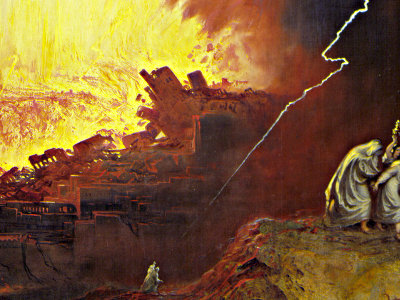 It’s common to hear evangelists encourage lost people wandering in the darkness of hopelessness by saying, “It’s never too late.”
While it is true that anybody who desires to surrender their lives to the love and leadership of Jesus will be welcomed with open arms, it’s not true that it’s never too late. If we want to return to God now, it’s because the Holy Spirit is drawing us. There can come a time where our rejection of God will be respected, and the drawing will cease.
I’ve taught previously on the very interesting and troubling topic of a great delusion. Due to repeated wickedness, there comes a time when people are given over a debased mind, to a delusion:
9 The coming of the lawless one is by the activity of Satan with all power and false signs and wonders, 10 and with all wicked deception for those who are perishing, because they refused to love the truth and so be saved. 11 Therefore God sends them a strong delusion, so that they may believe what is false, 12 in order that all may be condemned who did not believe the truth but had pleasure in unrighteousness. 2 Thessalonians 2:9-12 (ESV)
And since they did not see fit to acknowledge God, God gave them up to a debased mind to do what ought not to be done. Romans 1:28 (ESV)
Isaiah was commissioned to prophesy this very thing—that eyes would be blinded to truth.
8 And I heard the voice of the Lord saying, “Whom shall I send, and who will go for us?” Then I said, “Here I am! Send me.” 9 And he said, “Go, and say to this people: “‘Keep on hearing, but do not understand; keep on seeing, but do not perceive.’ 10 Make the heart of this people dull, and their ears heavy, and blind their eyes; lest they see with their eyes, and hear with their ears, and understand with their hearts, and turn and be healed.” 11 Then I said, “How long, O Lord?” And he said: “Until cities lie waste without inhabitant, and houses without people, and the land is a desolate waste, Isaiah 6:8-11 (ESV)
How strange (and troubling) it is that God would do this. In his wisdom, he opens and closes the window of opportunity for people to come to him.
Most often we presume people have until the day they die to turn to the Lord. This isn’t the case. There are many who have been turned over to delusion. Eyes have been blinded. Others have committed the unforgivable sin of blasphemy of the Holy Spirit. It’s too late.
Many are nearing the point of no return, and for a significant number of them it will come well before they die. They will be spiritually hopeless, fully dead, possibly decades before an obituary is written.
This is a terrifying reality, and it should increase our urgency for intercession and evangelism.
Of course, only God knows who has crossed this line, and our job is to continue to contend for all. Additionally, we know that at other points in the book of Isaiah we see him prophesying eyes that see and ears that hear.
6 “I am the LORD; I have called you in righteousness; I will take you by the hand and keep you; I will give you as a covenant for the people, a light for the nations, 7 to open the eyes that are blind, to bring out the prisoners from the dungeon, from the prison those who sit in darkness. Isaiah 42:6-7 (ESV)
The reality remains, however, that many eyes will forever be closed, many people forever imprisoned in delusion.
DO NOT PRAY FOR THE WELFARE OF THIS PEOPLE
There can come a time personally when we cannot return to Jesus.
There can also come a time when a nation cannot return—until its people endure everything necessary to bring them to repentance.
Thus says the LORD concerning this people: “They have loved to wander thus; they have not restrained their feet; therefore the LORD does not accept them; now he will remember their iniquity and punish their sins.” Jeremiah 14:10 (ESV)
The weight of this verse is almost too much to bear—and God meant for it to be that heavy. He declared in no uncertain terms that he does not accept them. He will remember their iniquity and he will punish their sins. It would seem to be the perfect moment for a prayer movement to launch, for a cry of intercession to shatter the heavens. Unfortunately, it’s too late.
11 The LORD said to me: “Do not pray for the welfare of this people. 12 Though they fast, I will not hear their cry, and though they offer burnt offering and grain offering, I will not accept them. But I will consume them by the sword, by famine, and by pestilence.” Jeremiah 14:11-12 (ESV)
From the Adam Clarke Commentary:
O, how dreadful is the state of that people in reference to whom the Lord says to his ministers, Pray not for them; or, what amounts nearly to a prohibition, withholds from his ministers the spirit of prayer and intercession in behalf of the people!
Can you imagine, intercessors, gathering together with every intent to contend for our nation, when God then clearly reveals that we are forbidden to pray. It will do no good. His mind is made up.
I know some of you might be thinking about Abraham’s negotiations with God as he interceded fervently for Sodom and Gomorrah even as God was intent on destroying them. Can we not do the same if God reveals his plans for judgment on a nation? For those who are truly compassionate, they won’t be able to help but to wrestle with God. With tears in our eyes we would have no choice but to cry out for mercy. Sadly, in this account, it would have done no good. The clear command was that prayer was not to be made.
LYING PROPHETS
In a spiritual culture like we have today, the common reaction to such a topic would be that God, in his perfect love, is smiling over the people and is ready to receive them back. The idea of God standing in opposition to those he so deeply loves runs counter to much of the faulty theology that’s rampant today.
This scenario plays out as we continue in Jeremiah 14. Read this passage completely. The message is very clear:
13 Then I said: “Ah, Lord GOD, behold, the prophets say to them, ‘You shall not see the sword, nor shall you have famine, but I will give you assured peace in this place.’” 14 And the LORD said to me: “The prophets are prophesying lies in my name. I did not send them, nor did I command them or speak to them. They are prophesying to you a lying vision, worthless divination, and the deceit of their own minds. 15 Therefore thus says the LORD concerning the prophets who prophesy in my name although I did not send them, and who say, ‘Sword and famine shall not come upon this land’: By sword and famine those prophets shall be consumed. 16 And the people to whom they prophesy shall be cast out in the streets of Jerusalem, victims of famine and sword, with none to bury them—them, their wives, their sons, and their daughters. For I will pour out their evil upon them. Jeremiah 14:13-16 (ESV)
There are those who will reject truth for the sake of keeping people hopeful and happy. These lying prophets are everywhere today, and they will only increase, especially if our nation ever gets to the point that the people in this story did.
1 Then the LORD said to me, “Though Moses and Samuel stood before me, yet my heart would not turn toward this people. Send them out of my sight, and let them go! 2 And when they ask you, ‘Where shall we go?’ you shall say to them, ‘Thus says the LORD: “‘Those who are for pestilence, to pestilence, and those who are for the sword, to the sword; those who are for famine, to famine, and those who are for captivity, to captivity.’ Jeremiah 15:1-2 (ESV)
Adam Clarke explains the above passage (and the following verses in the account) well:
God declares to Jeremiah that not even Moses and Samuel, whose prayers had been so prevalent, could divert him from his purpose of punishing so wicked a people, v. 1. Accordingly their captivity is again announced in a variety of images so full of terror, vv. 2-9, that the prophet complains of his own hard fate in being obliged to deliver such unwelcome messages, v. 10; for which too he is reproved, vv. 11-14. Immediately he appeals to God for his sincerity, and supplicates pardon, vv. 15-18; and God tempers his reproof with promising again to protect him in the faithful discharge of his duty.
A QUICKLY CLOSING WINDOW
America is not at this point of no return—yet.
There are movements of holiness, revival and passionate, devoted intercession growing from coast to coast. Awakening is happening.
However, I don’t believe these movements are currently strong or numerous enough to outpace the movement of wickedness that’s both in the world and in the church today.
What this means is that the window of opportunity is quickly closing and if we don’t exponentially increase our efforts, judgment very certainly will come to us.
If judgment does come to America, I believe God will preserve the remnant, radically devoted church as he promised to Jeremiah and as he did at Goshen with the Israelites.
25 The hail struck down everything that was in the field in all the land of Egypt, both man and beast. And the hail struck down every plant of the field and broke every tree of the field. 26 Only in the land of Goshen, where the people of Israel were, was there no hail. Exodus 9:25-26 (ESV)
This isn’t a time for fear as God’s own will be protected (though this doesn’t mean hardship or persecution won’t come). This is a time to be marked by tears, just as Jeremiah was.
Oh that my head were waters, and my eyes a fountain of tears, that I might weep day and night for the slain of the daughter of my people! Jeremiah 9:1 (ESV)
Don’t listen to the lying prophets who are saying that all is well and no judgment will come.
Do rend your hearts.
Do contend for revival.
Do pray, while there is time, before God tells us that we can pray for our nation no more.
Video: Is the local church a threat to revival?
From Moriah Ranch: Watch as I break down just why the local church may be the most significant threat to revival.
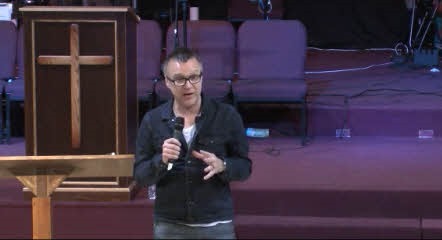 The church is identified in Scripture by the region it is in, not the corner on a street. It’s regional. This means, the pursuit of revival must be regional in focus. In fact, the revival most likely will ignite in an area of town that’s not your own. Will you abandon the local effort for the sake of the greater regional work?
As a lover and fervent supporter of the local church, it pains me to admit that often times it is in fact the church that stands opposed to revival in a region. Spirit-filled, revival focused churches can easily become resisters when the pursuit of revival in a region threatens their own pursuits.
WATCH THIS MESSAGE below or at www.thefurnace.tv/media.
Is the Holy Spirit a casualty of unity?
It’s common for the Holy Spirit to be asked to “sit this one out” as attempts at unity are made.
 I have wrestled with this topic for years . It has troubled me considerably. I’ve held off writing on it for a long time to ensure I do my very best to communicate the issue as purely and precisely as I can. I believe now is the time to hit this head on, even though some will still misunderstand or completely disagree.
It’s extremely important to me that you grasp just how much I value people who are devoted to Christ, deep in the Word and living a life of integrity—whether they embrace the gifts of the Spirit or not. There are some absolutely amazing, humble, servant-hearted Christians out there who touch my heart deeply. Many of them are brilliant leaders who are models of both passion and compassion for the people on God’s heart. I look up to them and desire to emulate their lives.
I know others have the same testimony—they have been blessed powerfully by such people. It’s for this reason that gifts of the Spirit have been willingly minimized by some for the sake of unity.
Again, I highly value unity, and I do embrace unifying around the cross of Christ as opposed to dividing away on other lesser theological issues. It’s clearly true that anybody who is a legitimate believer in Jesus Christ should be embraced as a brother or sister. Unity, fellowship and love should be pursued and guarded.
20 “I do not ask for these only, but also for those who will believe in me through their word, 21 that they may all be one, just as you, Father, are in me, and I in you, that they also may be in us, so that the world may believe that you have sent me. John 17:20-21 (ESV)
Additionally, I don’t presume those who function in the gifts of the Spirit to be better, more precious to Jesus or elite. The accusation does come at times that practitioners of the gifts presume themselves to be more spiritual. We better not think highly of ourselves, lest we fall!
For by the grace given to me I say to everyone among you not to think of himself more highly than he ought to think, but to think with sober judgment, each according to the measure of faith that God has assigned. Romans 12:3 (ESV)
Therefore let anyone who thinks that he stands take heed lest he fall. 1 Corinthians 10:12 (ESV)
I hope this helps you peer into my heart a little bit. I endeavor to be humble, teachable and full of honor for everyone Jesus shed his precious blood for!
This being said, I do believe we have underestimated the necessity of the Holy Spirit and His gifts—to the detriment of true, biblical unity and to Kingdom advance.
Mark records the final words of Jesus before he left the earth to be:
17 And these signs will accompany those who believe: in my name they will cast out demons; they will speak in new tongues; 18 they will pick up serpents with their hands; and if they drink any deadly poison, it will not hurt them; they will lay their hands on the sick, and they will recover.” Mark 16:17-18 (ESV)
MINIMIZING THE ACTIVITY OF THE HOLY SPIRIT
I understand there are many Christians who do not agree theologically with the practice of the gifts of the Spirit. I also understand that unity with a greater number of Christians would, by default, require that we minimize the activity of the Holy Spirit in our combined events.
This is where we can stumble into trouble. This is where a reformation must come if we hope to have the necessary power to fulfill a humanly impossible mission. Holy Spirit power must be non-negotiable.
Isn’t it interesting that the Holy Spirit is called the Comforter, yet He makes so many Christians uncomfortable?
I saw something on a church website that disturbed me. What I read sounds good, and a lot of churches and ministries are adopting this philosophy, but that’s all it is—a philosophy. I believe it’s extremely dangerous. We simply cannot reject the activity of the Holy Spirit in the hopes that unity results. Here’s what was posted:
Those who claim to possess the gift of tongues and other sign gifts are welcome to worship and fellowship with us if they are willing to be a source of unity rather than division within our church body. UNNAMED CHURCH seeks to prevent the propagation of doctrines that would cause divisions within an individual church. Therefore, members of and adherents of UNNAMED CHURCH are not to propagate the teachings and emphases of the current charismatic movement.
Before you presume me to be naïve, you need to know that I fully grasp that the above church is not what we would consider to be Spirit-filled, and that they are attempting to take a healthy position in the name of unity. However, consider that many, many Spirit-filled churches today are also minimizing the activity of the Holy Spirit in the hopes that they can attract, and not offend, visitors. It’s extremely common for the Holy Spirit to be dismissed for the Sunday morning service while inviting him back into HIS house for the Sunday evening service.
I have always, unapologetically, declared to those in churches I was giving leadership to that I refuse to tone down the activity of the Holy Spirit out of respect of those less hungry.
How could we ever presume that less supernatural, less spiritual methods that are driven by our human spirit and human wisdom could have more impact with visitors and others than the Holy Spirit? It is nonsensical.
The manifestation of the Holy Spirit is absolutely necessary if we hope to experience the power required to see lives transformed.
4 Now there are varieties of gifts, but the same Spirit; 5 and there are varieties of service, but the same Lord; 6 and there are varieties of activities, but it is the same God who empowers them all in everyone. 7 To each is given the manifestation of the Spirit for the common good. 1 Corinthians 12:4-7 (ESV)
While we can be unified in love as brothers and sisters while disagreeing about the activity of the Holy Spirit, I firmly believe it’s time that we as Spirit-filled believers humbly admit that we cannot accomplish much of anything without the manifestation of the Holy Spirit. The activation of the gifts of the Spirit is mandatory. The level of power in the church today is embarrassingly low. We can’t use unity as an excuse to keep the Holy Spirit on the bench any longer. It’s His time to shine.
The above passage of Scripture reveals that the gifts of the Spirit are for the common good. That sounds like unity to me. It also says that God empowers these gifts in us. This is for the sake of the fulfillment of ministry.
When the Holy Spirit was given in that Upper Room, two specific manifestations were imparted into the people who were baptized in fire:
- Boldness: And when they had prayed, the place in which they were gathered together was shaken, and they were all filled with the Holy Spirit and continued to speak the word of God with boldness. Acts 4:31 (ESV)
- Power: But you will receive power when the Holy Spirit has come upon you, and you will be my witnesses in Jerusalem and in all Judea and Samaria, and to the end of the earth.” Acts 1:8 (ESV)
The church must not only experience boldness and power, but we must be fueled by it in every moment, every service, every event. This is what was happening at Brownsville Assembly of God:
All told, more than 2.5 million people have visited the church’s Wednesday-through-Saturday evening revival services, where they sang rousing worship music and heard old-fashioned sermons on sin and salvation. After the sermons were over, hundreds of thousands accepted the invitation to leave their seats and rush forward to a large area in front of the stage-like altar. Here, they “get right with God.” . . . Untold thousands have hit the carpet, where they either writhe in ecstasy or lie stone-still in a state resembling a coma, sometimes remaining flat on the floor for hours at a time. Some participants call the experience being “slain in the Spirit.” Others simply refer to receiving the touch of God. Regardless of what they call it, these people are putting the “roll” back in “holy roller.”— Steve Rabey[3]
I believe we must see the manifestation of the Holy Spirit increase to a radical degree—enough that we have the supernatural power necessary to succeed. We need an outpouring like Brownsville to become normal in our churches again.
This means those who don’t embrace the gifts will have a decision to make. Understand this very clearly: we must never divide away from anyone who names the name of Christ, and who is living according to the Word of God. However, if others refuse to participate because the gifts are in play, they are the ones causing disunity. They are making the choice to pull away. It’s on them.
If we shut the gifts down, we are communicating that we are more interested in people being in attendance than the Holy Spirit, or at least, we want people to give leadership and determine what the Holy Spirit is allowed to do. This mindset should terrify us.
When I hold prayer events, praying in tongues is a constant. I absolutely love it when those who have yet to experience the baptism of the Holy Spirit join in with us. Honestly, that is one of my favorite times in prayer—when those who don’t pray in tongues refuse to allow that to get in the way.
Sadly, there are also those who refuse to attend such gatherings. It’s their decision, not mine.
But, let it be known: I will always choose the attendance of the Holy Spirit ahead of people. I will always allow the Holy Spirit to manifest the way he chooses, even if it upsets people. I will never offend the Spirit of God, even if that offends people.
I am smart enough to know that the goal of any corporate meeting is absolutely impossible without the power of the Holy Spirit raging throughout.
The manifestation of the Holy Spirit can’t be limited to times of prayer and worship. We need anointed men and women of God to preach with such power that entire rooms are filled with fire! Our church services much change, and fast!
While Peter was still saying these things, the Holy Spirit fell on all who heard the word. Acts 10:44 (ESV)
It’s time we see the temperature of Holy Spirit activity shoot so high the thermometer explodes. We need to have meetings that are so full of God’s presence that people have to crawl through the door! It’s time for a shaking, quaking, Spirit-filled environment of eruptions in prayer every Sunday morning (and every other day of the week)!
Doing ministry any other way just won’t work. It will accomplish some things, sure, but the goal we have been given requires power, boldness, signs, wonders, miracles and a lifestyle of burning, Spirit-driven intercession and worship. It’s time we actually become okay with scaring the visitors with the tangible, fearful movement of God in our services! They may actually hit their knees and cry out in repentance instead of sitting quietly filling out a visitor card. Maybe the greeter’s handshake in such an environment might actually impart something:
Then they laid their hands on them and they received the Holy Spirit. Acts 8:17 (ESV)
We can’t keep the Holy Spirit on the bench. We can no longer choose when or how he manifests. Do we want revival or not? Try to imagine revival without a supernatural atmosphere. You can’t. It doesn’t exist.
A newspaper report on the Asuza Revival:
..disgraceful intermingling of the races…they cry and make howling noises all day and into the night. They run, jump, shake all over, shout to the top of their voice, spin around in circles, fall out on the sawdust blanketed floor jerking, kicking and rolling all over it. Some of them pass out and do not move for hours as though they were dead. These people appear to be mad, mentally deranged or under a spell. They claim to be filled with the spirit. They have a one eyed, illiterate, Negro as their preacher who stays on his knees much of the time with his head hidden between the wooden milk crates. He doesn’t talk very much but at times he can be heard shouting, ‘Repent,’ and he’s supposed to be running the thing… They repeatedly sing the same song, ‘The Comforter Has Come.’[3]
Are you ready for the Comforter to come?
Revival Demystified
Why are we waiting around for revival? We can have it any time.
REVIVAL DEMYSTIFIED

Today’s video is a message off the cuff, from the heart, about the condition of today’s revival movement.
It’s a short, introductory word that will be developed into a more comprehensive teaching soon.
Revival isn’t to be nebulous or overly mystical. It’s easy to understand and simple to apprehend.
It’s an indictment on the condition of today’s church that we aren’t living revival lives today.
Watch this powerful message HERE.
Sickening arrogance of the New York Daily News | “God isn’t fixing this” is their response to shootings
“God isn’t fixing this” is the insolent decree by the New York Daily News.
Somebody needs to proactively put the godless voices of the New York Daily News in their place—and that somebody just may be God himself. Rich Schapiro, as the writer of the article, I’m especially talking to you.
The response of many after the recent terroristic, murderous rampage in San Bernardino, California was to pray and to call the nation to prayer. Whether the prayer was done in a righteous, fervent and effective manner or not is open for discussion (James 5:16), which I’ll address below, but to assault compassionate people for praying—and to unabashedly insult God in the process—is repugnant.
The premise of the article is that we should be doing something instead of praying, such as controlling guns. The arrogant position they are assuming is that God is unnecessary and that we have the ability to bring resolution to an evil world in our own human power(or, more accurately, the power of the Democrats).
The headline of the New York Daily News on December 3, 2015 includes:
As latest batch of innocent Americans are left lying in pools of blood, cowards who could truly end gun scourge continue to hide behind meaningless platitudes.
Meaningless Platitudes?
Those last two words are in fact quite interesting, and possibly accurate.
platitude noun a flat, dull, or trite remark, especially one uttered as if it were fresh or profound
If the accusation is that remarks that include mention of prayer are trite or casually uttered, there may be some truth to that.
Is it possible God could use the New York Daily News to call our nation to a culture of fervent, genuine intercession? Is it possible that their disgust with the religious right’s sometimes disingenuous rhetoric regarding prayer has merit, and that those who are spiritual should first hit our knees in deep repentance? Honestly, how many prayer movements are there right now that are continually interceding, night and day, for our nation? How many pastors are on their knees hours a day? What churches have been marked as furnaces of intercession?
17 And he was teaching them and saying to them, “Is it not written, ‘My house shall be called a house of prayer for all the nations’? …” Mark 11:17 (ESV)
17 pray without ceasing, 1 Thessalonians 5:17 (ESV)
God isn’t fixing this?
Mr. Schapiro, I’ll tell you why God isn’t fixing this. It’s quite simple.
At every turn in recent years America has intentionally, strategically and aggressively disinvited God from our nation. His expulsion by those who are threatened by righteousness, morality and standards that used to define our country has had severe consequences.
You simply have to be kidding me if you think God is expected to respond after such national haughtiness and hatred of his standards has overtaken our culture. The cry has been God bless America, but only on our terms.
If we want God to fix this, it could happen almost overnight—if only the people of our nation, which includes you Mr. Schapiro, respond rightly to God—a God who yearns for you and us.
The quick, simple yet humbling and costly prescription for a God-sized fix is this:
13 When I shut up the heavens so that there is no rain, or command the locust to devour the land, or send pestilence among my people, 14 if my people who are called by my name humble themselves, and pray and seek my face and turn from their wicked ways, then I will hear from heaven and will forgive their sin and heal their land. 15 Now my eyes will be open and my ears attentive to the prayer that is made in this place. 2 Chronicles 7:13-15 (ESV)
Read it again. Slowly.
God will shut up the heavens, allow the devourer to invade our land and send pestilence in order to shake us to our knees.
The Lord God, the Alpha and the Omega, the first and the last, is literally the only answer to the rampage of violence in our land.
- Humble ourselves—we have to admit that without Jesus we are dark, evil, proud, rebellious and self-important. There must be a cry in our heart of deep apology to God for our rejection of him and his standards.
- Pray and seek God’s face—the call is not to say a prayer or to affirm prayer. It is to pray on fire, with passion, in unrelenting fashion. How many are truly on their knees as a lifestyle, calling out to God, adoring him, enjoying him, trembling in his presence? It’s an indictment on our nation that we can have church services that are devoid of a spirit of prayer, that we can have pastors who rarely pray and that we can have blood-bought Christians who don’t even know the one they follow. Prayer in schools had to be outlawed to eradicate it. Prayer in churches dissipated without legislation.
- Turn from our wicked ways—how in the world can we presume God would be at the ready if we are filling our minds and spirits with filth in media? How can we allow ourselves to be entertained by things such as foul language, violence, nudity and other grievous sins that required the slaughter and murder of God? How can we embrace lust, greed, unforgiveness, pride and every other sin and think that a simple prayer would bring protection? There is a sickness in the land, and those of us in the church must look inward first. The church is to be the resolution in our nation, but it will not be an entertained church—it will be a repentant, praying one.
- Then our sin will be forgiven and our land healed—our sin weakened nation is nearing collapse. It’s possible to see a world without America as a part of it. It’s laughable to think that gun control is the answer we are looking for. The answer is to admit our vile, nauseating sin, apologize to God and turn from that way of life forever as we discover a love of God we never knew could possibly exist.
God’s mighty works
Many mighty works have been done by God over the years in America. The great Azusa Street Revival changed the course of history as the Spirit of God invaded the world. Great healing revivals and movements launched from this land. Much more has been recorded and even more unrecorded on the amazing things God himself has done in this nation. Unfortunately that sets America up for destruction. This passage is terrifying:
20 Then he began to denounce the cities where most of his mighty works had been done, because they did not repent. 21 “Woe to you, Chorazin! Woe to you, Bethsaida! For if the mighty works done in you had been done in Tyre and Sidon, they would have repented long ago in sackcloth and ashes. 22 But I tell you, it will be more bearable on the day of judgment for Tyre and Sidon than for you. 23 And you, Capernaum, will you be exalted to heaven? You will be brought down to Hades. For if the mighty works done in you had been done in Sodom, it would have remained until this day. 24 But I tell you that it will be more tolerable on the day of judgment for the land of Sodom than for you.” Matthew 11:20-24 (ESV)
Because God proved himself and worked wonders in the land they were held to a higher accountability. Eternity in Hell is the future for a people who do not repent. America, God is talking to us. He’s shaking us.
We need Jesus. Rich Shapiro needs Jesus. Humility, prayer and repentance are our only hope.
If we do this right we will begin to hear the tears behind the calls to pray when trouble comes. We will see the movie theaters close and the churches fill up with humble, surrendered people who want to do little more than pray. Trite calls to prayer will be replaced by emboldened leaders trumpeting the mandate to hit our knees. Solemn assemblies will replace political debates. Revival will come, protection will be had and our enemies will be disempowered.
I’d say that would make a nuclear level prayer movement in our nation well worth it.
Where is your God?
The New York Daily News is boldly shouting, “Where is your God?”
This shouldn’t surprise us. This is where we are. This is what we read about in Joel chapter two:
12 “Yet even now,” declares the LORD, “return to me with all your heart, with fasting, with weeping, and with mourning; 13 and rend your hearts and not your garments.” Return to the LORD your God, for he is gracious and merciful, slow to anger, and abounding in steadfast love; and he relents over disaster. 14 Who knows whether he will not turn and relent, and leave a blessing behind him, a grain offering and a drink offering for the LORD your God? 15 Blow the trumpet in Zion; consecrate a fast; call a solemn assembly; 16 gather the people. Consecrate the congregation; assemble the elders; gather the children, even nursing infants. Let the bridegroom leave his room, and the bride her chamber. 17 Between the vestibule and the altar let the priests, the ministers of the LORD, weep and say, “Spare your people, O LORD, and make not your heritage a reproach, a byword among the nations. Why should they say among the peoples, ‘Where is their God?’” Joel 2:12-17 (ESV)
God is gracious and merciful, slow to anger and abounding in steadfast love. But only he knows how long his judgment will be held at bay.
Our time is here to return to the Lord with all of our heart, with fasting, with weeping and with mourning. It’s time for a solemn assembly. No excuses. We all must show up and pray.
America, it’s time to rend our hearts and let this great nation see just where our God is.
He’s endeavoring to move in power among his people, and he’s ready to rescue this great land.
Which side of Acts chapter 1 are you on?
Are you living on the right side of Acts chapter one? The answer will determine the course of your life.
Every morning when we awaken from a long night of sleep, we stretch, yawn and eventually step into a new day. In the natural we are functioning from a collection of experiences, training, opportunities, challenges and other influences that have helped determine our current experience. Some are waking up in the morning to get ready to operate on somebody’s heart because his natural training provided him that opportunity. Others are headed to classes in a university as a result of healthy planning. Still others are depressed, lonely, fearful, expectant, determined or are experiencing a myriad of other very real feelings due to their position in life. Their natural position.
Spiritually, where are you? Specifically, which side of Acts chapter one are you living on when you wake up each morning?
Listen to a podcast on this topic…
Acts Chapter 1
6 So when they had come together, they asked him, “Lord, will you at this time restore the kingdom to Israel?” 7 He said to them, “It is not for you to know times or seasons that the Father has fixed by his own authority. 8 But you will receive power when the Holy Spirit has come upon you, and you will be my witnesses in Jerusalem and in all Judea and Samaria, and to the end of the earth.” 9 And when he had said these things, as they were looking on, he was lifted up, and a cloud took him out of their sight. 10 And while they were gazing into heaven as he went, behold, two men stood by them in white robes, 11 and said, “Men of Galilee, why do you stand looking into heaven? This Jesus, who was taken up from you into heaven, will come in the same way as you saw him go into heaven.” Acts 1:6-11 (ESV)
Of course, the first chapter of Act’s position on the historical timeline comes after the death and victorious resurrection of Jesus. The question I’m asking is directed toward those who have been redeemed by the blood of the Lamb—Christians—those who have responded to the greatest gift man has ever been offered. Christian friend, it’s possible to be functioning on the right side of the cross and on the wrong side of the rest of the story.
Read the short passage in Acts 1:6-11 again. Let the power of that dramatic moment impact you. Put yourself in the position of the disciples of Jesus.
They had just experienced, to put it lightly, a dramatic season of life that culminated with their hero, their friend, God himself being brutally, savagely tortured and mutilated. They were suddenly alone, fearful and confused. Their holy hope was gone forever—so it seemed. Dead people don’t just wake up and walk out of their tombs after all, right?
Lazarus might disagree with that. So would Jesus. The disciple’s overwhelming hopelessness was miraculously displaced by the impossible. Jesus walked out his tomb.
They were fearful, alone and confused no more. Now the celebration begins! Now plans for the future can be discussed! This was the day the Lord Jesus himself created and it was time to rejoice and be glad!
The obvious next step was for Jesus to set up his Kingdom and to reign! The disciple’s question was an honest yet misguided one:
6 So when they had come together, they asked him, “Lord, will you at this time restore the kingdom to Israel?” Acts 1:6 (ESV)
They didn’t understand at all what the future held. The victory on the cross, in their minds, would result in Jesus doing much more of what they saw him do previously. Jesus was the man of the hour and they wanted to be in the front row for the show.
After all, Jesus had just spent 40 days talking to them about the Kingdom, right?
3 He presented himself alive to them after his suffering by many proofs, appearing to them during forty days and speaking about the kingdom of God. Acts 1:3 (ESV)
Yes, the Kingdom was coming, but not at all the way everyone had presumed. Jesus was about to launch them out of Acts chapter one and into Acts chapter two.
If you’ll remember, Jesus had already given them a mandate that it seems they casually overlooked:
4 And while staying with them he ordered them not to depart from Jerusalem, but to wait for the promise of the Father, which, he said, “you heard from me; 5 for John baptized with water, but you will be baptized with the Holy Spirit not many days from now.” Acts 1:4-5 (ESV)
The disciples had necessary teaching about the Kingdom and a mandate to wait for a promise that would enable them to initiate a world shaking mission.
However, in their minds they wondered why they would need a Promise if Jesus was there with them. Why would they need anything else? Jesus was going to work wonders and they would be there as his most fervent supporters!
Jesus Left—AGAIN
9 And when he had said these things, as they were looking on, he was lifted up, and a cloud took him out of their sight. Acts 1:9 (ESV)
Again, put yourself in the shoes of the disciples. What type of emotional crisis were they going through? First Jesus died, then he defied all odds and returned in victory. Now their plans for Jesus to build his Kingdom were cut down as they received an inconvenient mandate to pray and wait for some nondescript Promise—as Jesus again left them.
Now, their close friend, their superhero who would protect them from the threats of the many enemies in the land, was gone from them a second time—this time for good (at least in their lifetimes).
The Bible says that they were just standing there gazing into heaven.
My question to you is this: Are you gazing into heaven waiting for Jesus to show up and do what you are yearning for him to do? Or, are you taking action in the power of the Holy Spirit to do it yourself?
On the cross Jesus famously said, “It is finished!” His part is done. We have been left with an extreme mandate and a costly mission that must be in front of us every morning when we awaken, stretch and yawn and move into our day.
So often we are crying out for Jesus to heal the sick when he commanded us to heal the sick. Those on the wrong side of Acts chapter one will gaze into heaven waiting for Jesus to do it. Those who have been baptized with power and who have embraced their spiritual mission will function in the power of the resurrection by looking at someone and commanding that they take up their mat and walk!
True baptism in power results in an inconvenient life.
I’m convinced that casual ‘gazing into heaven’ type prayer is often unanswered because Jesus is putting the pressure on us to get into the prayer rooms where supernatural baptism can be found.
The angelic question in Acts 2 remains for us today:
11 …“Men of Galilee, why do you stand looking into heaven?” Acts 1:11a (ESV)
Those who are living on the wrong side of Acts chapter one have bought into the resurrection power of the cross but have yet to step into their life mission that requires a devotion that will put every other life focus at risk. They want to continue in their day-to-day life hoping that Jesus will be the hero and rescuer they might need in times of trouble. The call to greater consecration is unnecessary since they are already saved and the victory of the cross was complete.
The truth is that the victory of the cross launches our mission. It doesn’t end it. When Jesus said “it is finished,” for us it meant, “it has begun.”
The enemy is moving across the earth stealing, killing and destroying. How could we even begin to think our work is done or unnecessary?
The blood of Jesus doesn’t grant us immunity, it grants us authority—authority to tread on serpents, authority to heal the sick, authority to advance the Kingdom, authority to go and make disciples.
Those living on the right side of the chapter are burning with that mission every single day. They wake up on fire with an urgency to fulfill their extremely important commission.
The life of someone living in Acts chapter two and beyond looks radically different than the lives of other Christians.
PRAYER
The call to prayer was too inconvenient for most everybody who saw Jesus alive after the resurrection. Only 120 showed up in that room. Only 120 determined it was necessary to actually obey Jesus. To them Jesus was more Savior than Lord.
Living on the right side of Acts one requires obedience. It requires us to be people of extravagant, inconvenient prayer.
Acts two started with prayer in an Upper Room and it continued with prayer daily in the temple.
17 pray without ceasing, 1 Thessalonians 5:17 (ESV)
Today we have innumerable people who are naming the name of Christ who are living in constant disobedience by refusing to live a life of continual prayer.
Corporate prayer is such a clear and obvious mandate for Christians that it is beyond shocking and nonsensical that so many are not investing in it. They are living after the resurrection but before Acts, presuming that all is well and there is nothing left to be done. Both Resurrection power and Holy Spirit power are required before we can even begin to understand our life purpose—much less fulfill it.
The corporate prayer meetings are the most important meeting and every Christian must be in attendance. In fact, In Acts 2 corporate prayer was a daily occurrence. This is what must return to our churches today.
46 They worshiped together at the Temple each day… Acts 2:46 (NLT)
This means we can no longer continue without coming together for Holy Spirit infused prayer every day and presume it’s okay or normal. It’s not. Those living on the right side of Acts one can’t stand the thought of going a day without encountering God in prayer with other Believers.
CHURCH
Acts Christians were radically invested in both corporate church gatherings and planting of new churches.
I’m grieved at the number of Christian “church haters” (is that even possible?) that are on the rise. People are creating theologies that argue against the corporate church setting that are laughable.
Consider Chinese Christians who gather together every morning at 4:30am, seven days a week, to pray and worship together as the church before they begin their day. In America we think a couple hours a week is too inconvenient!
Can somebody explain to me how coming together with other Christians every day to pray on fire is a bad thing? How is that something that doctrines are being created to oppose? Truly those are doctrines of demons.
Some might say that they don’t need to attend church because “they are the church.” They would be incorrect.
From my article, You are not the church:
If we understand the meaning of the word ‘church’ we could never presume that we alone are the church. That idea is contrary to the origin of the word (ekklesia, meaning “assembly”). In fact, that word has secular origins. It literally means an assembly of people who have been called together by an authority in the city or region. Wow! That sheds a lot of light on what the church is.
The church is an assembly of people organized under defined governmental leadership. It’s a regular gathering of people who are deeply agreed and in pursuit of mission advance under God’s apostles, prophets and other governmental leaders.
Further, the pure definition of the word reveals that it isn’t used as easily in the context of the global company of believers as it is in the regional and local gathering of believers.
The definition reveals that it’s a well defined local group vs. a loosely defined larger group of people (who mostly don’t know each other at all). We can’t be a part of the church if we aren’t gathered together with other parts of the church. Church is corporate.
Additionally, the church is a group of people who assemble, fellowship, pray and respond together to apostolic teaching. That can’t happen in a more nebulous global context.
The church has inherent in it’s core call the expectation of assembly and a corporate response so as to ensure the local mission is fulfilled. Again, a fulfilled mission can’t be realized without this type of intentional and faithful participation at a local level where communication and commonality are clearly defined.
Those living in Acts Holy Spirit power understand the need to be rightly aligned with men and women of God. They understand the church gathering isn’t foundationally a social one. It’s a strategic one. Great numbers of people coming together to pray and to receive apostolic instruction is necessary on a daily basis if we are to advance the gospel in victorious fashion.
The church is a military. It has a mission.
Church haters have gripes about how they were treated, about disagreements with focus, about not being recognized, about most anything. True biblical Holy Spirit empowered Christians are ready to die to their own opinions and serve. Today when people are rejected they run from the church with complaints in their hearts. Two thousand years ago when Jesus was rejected he died for the church with love in his heart.
CULTURE
Acts Christians are not flowing under the radar, blending in with their culture. They are causing controversies and inciting riots!
40 For we really are in danger of being charged with rioting today, since there is no cause that we can give to justify this commotion.” Acts 19:40 (ESV)
It angers me that so many supposed Christians refuse to declare the offensive Gospel message out of fear that they may lose friends, offend family or put their financial security at risk!
Did you know that’s why there was a riot in Ephesus? People’s financial well being was compromised when Paul and his team of firebrands arrived on the scene!
23 About that time there arose a great disturbance about the Way. 24 A silversmith named Demetrius, who made silver shrines of Artemis, brought in no little business for the craftsmen. 25 He called them together, along with the workmen in related trades, and said: “Men, you know we receive a good income from this business. 26 And you see and hear how this fellow Paul has convinced and led astray large numbers of people here in Ephesus and in practically the whole province of Asia. He says that man-made gods are no gods at all. 27 There is danger not only that our trade will lose its good name, but also that the temple of the great goddess Artemis will be discredited, and the goddess herself, who is worshiped throughout the province of Asia and the world, will be robbed of her divine majesty.” 28 When they heard this, they were furious and began shouting: “Great is Artemis of the Ephesians!” 29 Soon the whole city was in an uproar. The people seized Gaius and Aristarchus, Paul’s traveling companions from Macedonia, and rushed as one man into the theater. Acts 19:23-29 (NIV)
I absolutely love Acts 19 verse 23:
23 About that time there arose a great disturbance about the Way. Acts 19:23 (NIV)
Where is such a disturbance today?
“God loves you and has a wonderful plan for your life” is not the gospel message! It’s a true message, but it’s not the gospel message. When we start preaching about man’s depravity, our darkness, and God’s holiness and Lordship and his extreme sacrifice on the cross we will begin preaching the gospel. Anything that does not upset culture as it sets people free is suspect as a true message.
MISSION
People on the right side of Acts chapter one will burn with a mission. Others will live normal, low impact lives. Sure, they may enjoy God, say their prayers, go to church, worship him, read their bibles and be people of great conviction. However, the very reason they were born eludes them. The tears over the lost and the zeal for intercession are absent. An aggressive, unwavering daily pursuit of humanly impossible God given projects and assignments is nowhere to be found.
The primary purpose of the Promise in the Upper Room was not to make us feel better as we worship or to help us in our daily lives. The primary purpose of the Holy Spirit is to empower us to live free from sin (He’s the HOLY Spirit) and to preach the message of the cross to the world; to expand the Kingdom. How different this is than what the disciples presumed in Acts one!
The Holy Spirit enables us to work and to advance in mission in ways that are not possible via human determination. Jesus is physically gone and we are the ones to do the work!
12 I tell you the truth, anyone who has faith in me will do what I have been doing. He will do even greater things than these, because I am going to the Father. John 14:12 (NIV)
When on the earth, Jesus was about his Father’s business. Now that he is gone we are to be about our Father’s business!
49 And He said to them, “Why did you seek Me? Did you not know that I must be about My Father’s business?” 50 But they did not understand the statement which He spoke to them. Luke 2:49-50 (NKJV)
I propose there are many post-resurrection/pre-Upper Room Christians today who also don’t understand what it is to be about our Father’s business.
Acts chapter one where we see disciples of Jesus transition into apostles. In a moment, they went from followers to ‘sent ones’ with a mission.
I want to encourage you, when you wake up each morning, stretch and yawn and get ready for the day that you function as a sent one. Burn with a passion for Jesus and the advance of his Kingdom. Embrace the impossible assignments that God has for you. Pray continually with others. Live and walk in the Spirit. Disrupt the culture you live in. Trouble the lukewarm and awaken the sleepers. Live in great power—power that’s found on the other side of Acts chapter one.